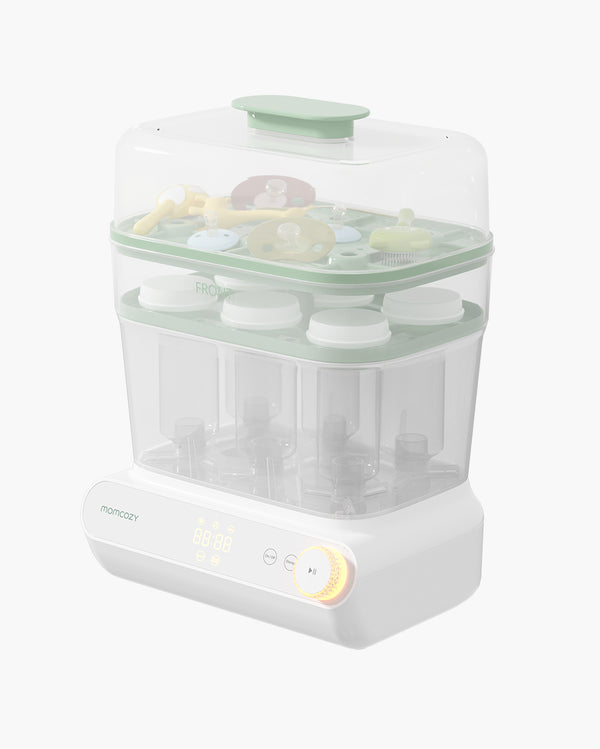
Visible residue, damp storage, or missed small parts usually signal a problem with cleaning, drying, handling, or replacement—not automatically that you need to sterilize bottles more often. The essential routine is to clean every feeding item after use, let it dry completely, and then follow the sanitizing or sterilizing guidance that applies to your baby’s age, health needs, and location.
In U.S. guidance, bottles should be cleaned after every feeding, while daily sanitizing is especially important for babies younger than 2 months, babies born prematurely, and babies with weakened immune systems. CDC guidance on cleaning, sanitizing, and storing infant feeding items explains the distinction.
Cleaning Comes Before Sanitizing
Cleaning and sanitizing are related, but they are not interchangeable.

Cleaning removes milk or formula residue from bottles and their parts. Sanitizing is an added germ-reduction step that comes after cleaning when it is appropriate for your baby and local guidance. Sanitizing a bottle that still has milk film in a nipple, valve, or ring does not correct the underlying cleaning gap.
A complete bottle routine includes more than the bottle body. Take apart and clean the parts your system uses, such as:
- Bottles
- Nipples or teats
- Rings and caps
- Valves or membranes, if present
Nipple holes deserve particular attention: if they are not cleaned through, the routine is incomplete.
Signs Your Routine May Have a Gap
These observations do not prove that a bottle is contaminated or that your baby is unwell. They are practical prompts to look closely at the full routine before assuming that more frequent sterilizing is the answer.
What You Notice |
What to Check and Change |
Milk film, cloudy residue, or buildup |
Disassemble the bottle fully and make sure every component is being washed, including nipple holes, valves, and membranes. Sanitizing should follow proper cleaning, not replace it. |
A smell that remains after washing |
Recheck whether small parts are being separated and washed thoroughly. Make sure equipment is completely air-dried before it is stored. |
Parts are put away damp |
Change the drying routine. Incomplete air-drying before storage can support germ and mold growth. |
Bottles or parts are dried with a dish towel |
Let them air-dry instead. Rubbing or patting parts dry with a dish towel can transfer germs back onto clean equipment. |
A drying rack stays wet or is hard to clean |
Review whether moisture is being trapped. A rack that holds moisture or is difficult to clean can allow mold and germs to grow. |
Cracks or tears in nipples/teats |
Set the affected item aside and inspect it carefully. Check for damage; if found, replace the item. |
If you have an ongoing odor after a careful wash-and-dry routine, or find damaged parts, pause and reassess the equipment.
How Often to Sanitize or Sterilize
The right frequency is not identical everywhere. U.S. and U.K. public-health guidance uses different approaches, so apply the guidance for where you live and follow any individualized instructions from your baby’s clinician.

In the United States
For older, healthy babies, daily sanitizing may not be necessary if all feeding items are carefully cleaned after every use.
Daily sanitizing is particularly important for:
- Babies younger than 2 months
- Babies born prematurely
- Babies with weakened immune systems
This is a risk-based approach. It does not mean every family must sanitize after every feed, and it does not make after-every-use cleaning optional.
A dishwasher may remove the need for a separate sanitizing step only when the feeding items are dishwasher-safe and the machine uses a qualifying hot-water cycle with heated drying or a sanitizing setting. Check both the bottle manufacturer’s instructions and the dishwasher guidance for compatibility.
In the United Kingdom
NHS guidance advises sterilising all baby feeding equipment, including bottles and teats, until a baby is at least 12 months old. NHS guidance on sterilising baby bottles also makes clear that equipment should be cleaned before sterilising.
This is not a contradiction with U.S. guidance. The recommendations reflect different public-health guidance and should be followed according to your location.
Protect Clean Parts Afterward
Even a well-cleaned or sanitized bottle can be re-contaminated during washing, drying, reassembly, or storage. A few routine adjustments can make the schedule you choose more effective.

- Use a clean wash basin for feeding items when hand-washing. Washing directly in a sink can re-contaminate bottles and parts.
- Clean and air-dry the bottle brush and basin. They are part of the bottle-care routine, not separate from it.
- Let all parts dry completely. Do not reassemble or store equipment while moisture remains trapped inside bottles, nipples, caps, or valves.
- Avoid towel-drying. Air-dry items in a protected area instead of rubbing them with a dish towel.
- Wash your hands before reassembling dry parts. Clean hands matter after sanitizing as well as before feeding.
- Store dry items in a clean, protected area. Leaving them exposed or handling them with unwashed hands can undo the care taken during cleaning and sanitizing.
A Simple Way to Decide What to Change
If your bottles are visibly dirty, stay damp, or have hard-to-reach parts that are routinely skipped, improve cleaning, drying, inspection, and storage first. If those steps are consistent but your baby is under 2 months, premature, immunocompromised, or covered by local guidance calling for routine sterilising, add the appropriate sanitizing or sterilizing step.
Most families do not need a complicated system. They need a dependable wash-first routine, complete air-drying, protected storage, and a sanitizing schedule that fits their baby’s needs and local advice.